A description can name several materials without saying the entire apron is made from each one. Read the part named beside the material before comparing products.
Make a component map
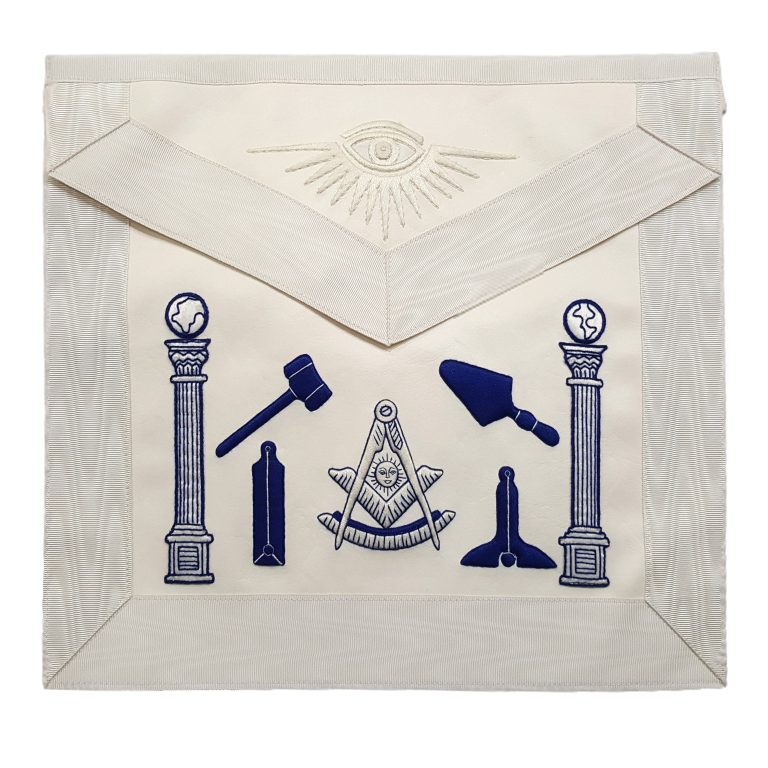
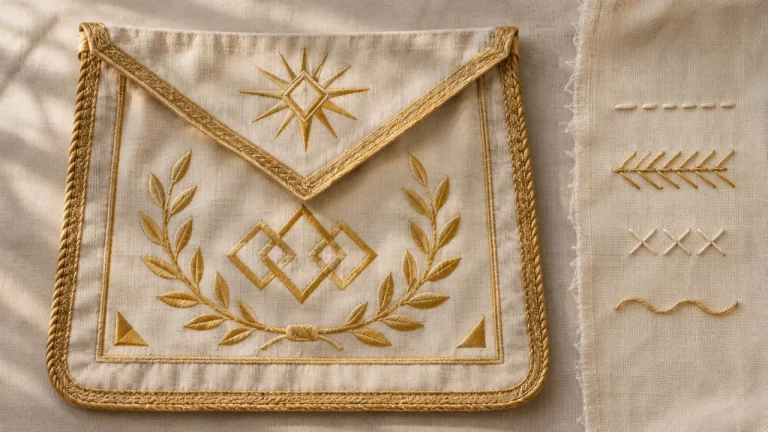
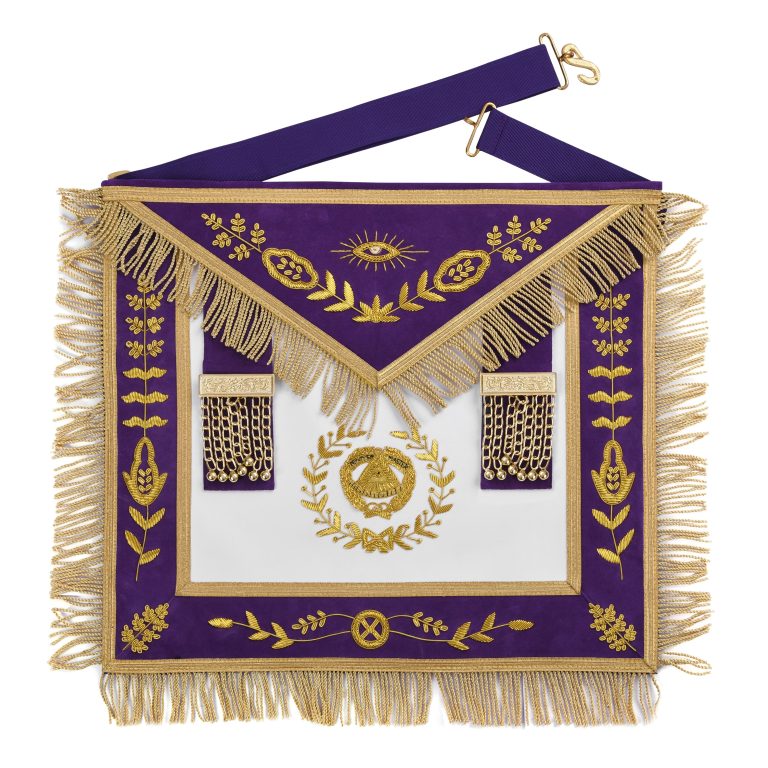
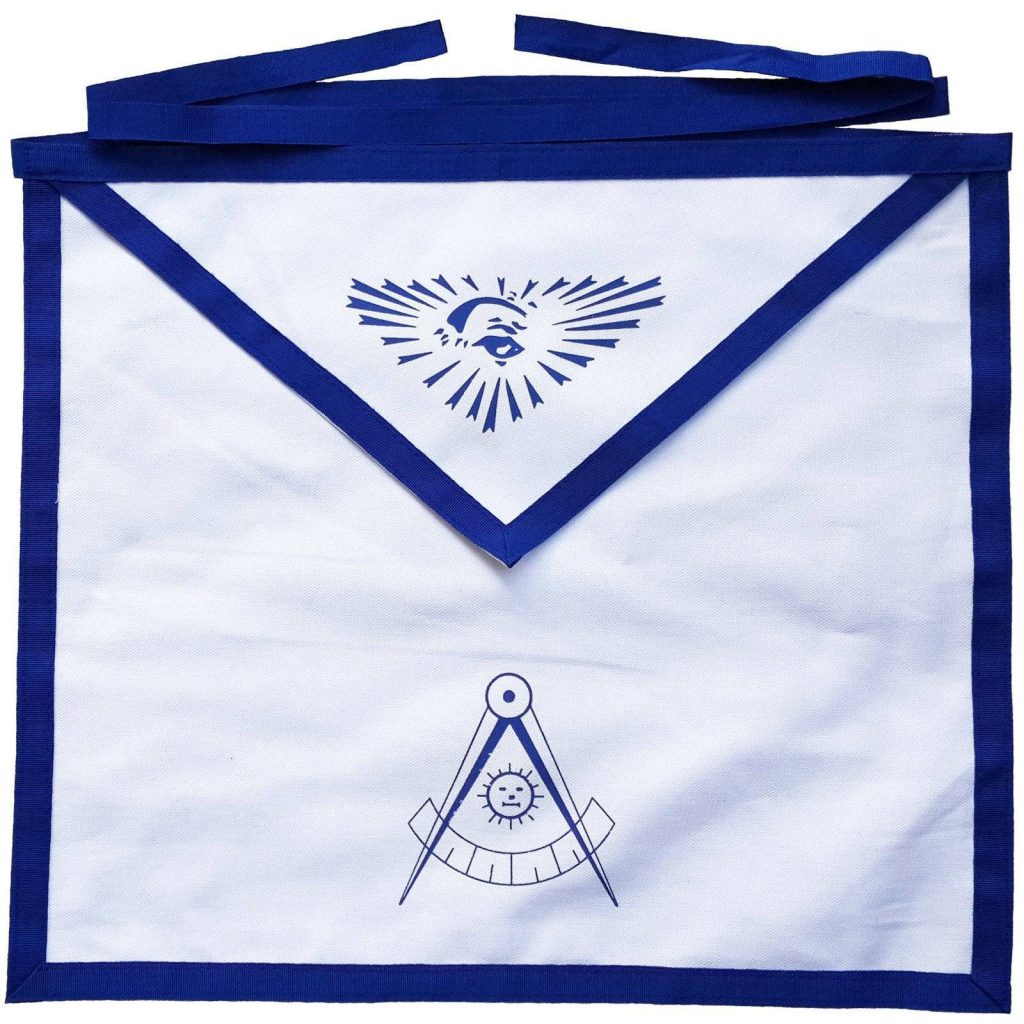
- Body: the main apron panel; use the selected body-material option.
- Border: the edge treatment named in the design description.
- Lining: the reverse-side layer where the listing identifies one.
- Trim: separately described braid, fringe, tassels or decoration.
This is a reading aid, not a specification for every apron. A part not mentioned in a listing still needs confirmation.
Apply it to a real listing
The Blue Velvet with Gold Fringe Master Mason apron names velvet in its design while offering Synthetic, Leather and Lambskin body-material options. Do not substitute the title’s velvet wording for the selected material. Those verified option labels do not establish the composition of every trim component.
Compare corresponding parts
Compare body with body and border with border. Keep embroidery method in its own line. If one description specifies a component and the other does not, mark the second as unconfirmed rather than treating the omission as proof of a difference. Ask “What is the border material on this selected option?” and include the product link and variation.
Next step
Use the component map while browsing aprons or ask about a missing component specification.